
AI & Neuroscience: Why Emoticonnect Is Becoming a Strategic Imperative for the Automotive Industry in 2026
In 2026, the automotive industry is undergoing a transformation far deeper than electrification alone. Vehicles are no longer defined solely by mechanical performance; they have become software-defined platforms, connected environments, and continuous interaction spaces. As this transformation accelerates, the human being — not the machine — becomes the true center of complexity.
At the heart of this shift lies a dimension the industry has historically underestimated: emotion.
The convergence of artificial intelligence and neuroscience is redefining what vehicle intelligence means. With Emoticonnect, this convergence becomes operational — enabling vehicles to understand human emotional states, enhance safety, elevate user experience, and create sustainable competitive advantage.
The cognitive reality of driving
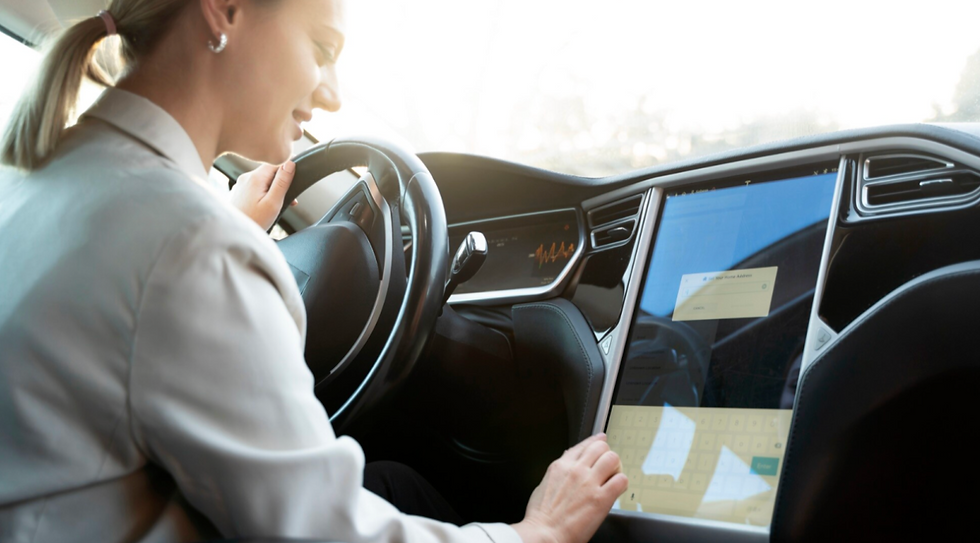
Modern vehicles integrate advanced driver assistance systems, voice interfaces, large digital dashboards, augmented displays, real-time alerts, and constant data streams. While these innovations improve technical capability, they also increase cognitive load.
Urban stress, long-distance fatigue, traffic frustration, information overload — these emotional states directly affect reaction time, decision-making quality, risk perception, and attention span.
Road safety remains largely influenced by human factors. In this context, understanding the driver’s emotional and cognitive state is no longer a “nice to have” feature. It is a performance and prevention issue.
Traditional AI focuses on objective metrics: speed, trajectory, braking behavior, lane position. AI enhanced by neuroscience goes further. It interprets behavioral, vocal, and physiological signals to detect cognitive load, stress, fatigue, or distraction in real time. It enables the vehicle not just to respond to the road, but to adapt to the human being behind the wheel.
From detection to adaptation
Emoticonnect operates at the intersection of emotional intelligence and machine intelligence. Through multimodal analysis — including voice patterns, micro-expressions, behavioral indicators, and contextual data — it transforms subtle human signals into actionable insights.
The purpose is not surveillance. It is adaptation.
When cognitive overload is detected, the interface can simplify. When stress levels rise, non-essential notifications can be postponed. When fatigue is identified, assistance systems can intensify support. Interaction becomes dynamic, responsive, and contextual.
This marks a paradigm shift. The vehicle evolves from reactive to empathetic. It no longer merely executes commands; it understands conditions.
A strategic lever for safety and regulation
By 2026, regulatory frameworks across major markets continue to strengthen requirements around driver monitoring and active safety. Automakers must demonstrate their ability to detect drowsiness, distraction, and risk-prone behaviors.
However, compliance is only the baseline.
Emotion-aware AI provides a proactive layer of prevention. By anticipating cognitive decline or emotional escalation, it helps reduce accidents linked to human error. The impact extends beyond safety metrics — affecting insurance costs, liability exposure, brand perception, and ESG performance.
In an industry where technical platforms are increasingly standardized, emotional intelligence becomes a new axis of differentiation.
Experience as the new competitive frontier
As electrification advances and mechanical architectures converge, product differentiation shifts toward experience.
A vehicle capable of adjusting its interaction style, cabin environment, lighting, or assistance level based on the driver’s emotional state creates a fundamentally different relationship between brand and user. It builds trust, comfort, and attachment.
Neuroscience also allows manufacturers to move beyond traditional declarative research. Drivers do not always articulate what they truly feel. Emotional and neuro-behavioral analysis provides objective insight into real reactions to interfaces, alerts, and driving situations.
With Emoticonnect, emotion becomes measurable, interpretable, and strategically valuable data. It informs HMI optimization, reduces friction points, and guides the design of future mobility ecosystems.
Toward the neuro-adaptive vehicle
As semi-autonomous and autonomous driving capabilities expand, the role of the vehicle evolves. It becomes a workspace, a relaxation space, a transitional environment between professional and personal life. This shift increases the importance of emotional regulation within the cabin.
The vehicle of 2026 does more than transport. It supports attention, reduces stress, manages transitions, and adapts to context. It becomes neuro-adaptive.
In this environment, integrating solutions like Emoticonnect is not an incremental innovation. It is a strategic decision. Automakers and mobility players that embed emotional intelligence into their platforms are positioning themselves for the next phase of competitive advantage.
Artificial intelligence powered by neuroscience does not replace the human. It understands the human.
And in a world saturated with technology, the brands that demonstrate attentiveness — not just performance — will define the future of mobility.
In 2026, intelligent mobility will not only be autonomous. It will be emotionally aware.


Commentaires